
Survey feedback that leads to change: an interview with David de Léon

Angelina Korolchak, CEO, Org360
, 9 min read

Organizations collect a lot of feedback. Employee surveys, pulse surveys, 360 feedback and engagement questionnaires can generate more data than ever. The harder question is what happens next.
A survey can identify patterns, highlight problems and show how people experience an organization. But if the results are simply reviewed, presented and filed away, the feedback itself changes very little.
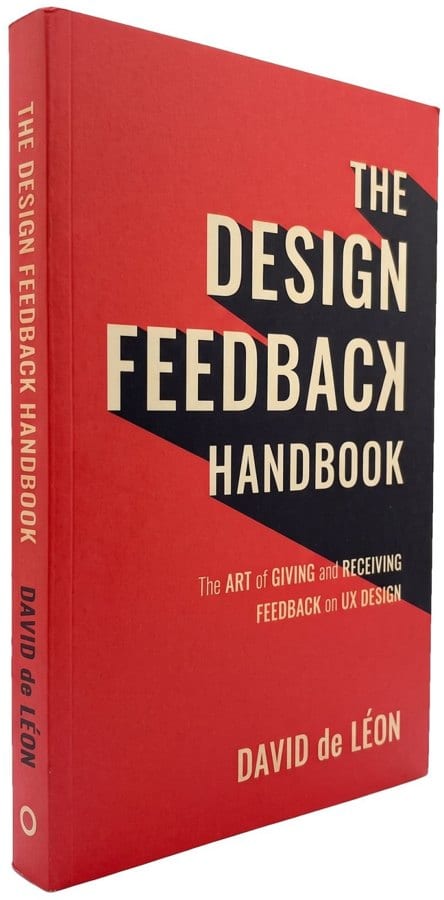
We spoke with David de Léon, a UX researcher and designer with a PhD in cognitive science and 25 years of experience, about what makes feedback genuinely useful. David is the author of The Design Feedback Handbook, a practical guide to giving, receiving and using feedback in design work.
His perspective matters for organizational feedback because, as he puts it, feedback on a design and feedback inside an organization often go wrong in surprisingly similar ways. The conversation covers trust, anonymity, survey design, qualitative feedback, AI and one central question: how do you turn survey feedback into action rather than another report?
You come to this from design and research rather than from surveys. What does that perspective bring?
I have taken surveys myself, worked in management teams interpreting the results of surveys and figuring out what actions to take. As a user researcher, I have designed and run surveys to answer specific research questions.
I am not an expert on surveys per se, but I hope my work on design feedback and my experience as a researcher might provide some fresh perspective. Feedback on a design and feedback in an organisation go wrong in surprisingly similar ways.
What is the real purpose of a survey inside an organization?
Surveys are meant to work as a kind of thermostat. They provide a regular measure used to tweak things in an organisation. Turn some things up and some down.
For that reason, the same survey is often used repeatedly so that surveys given at different times can be compared. This can be fine and very useful, but too often it becomes mostly a ritual, and very little activity follows from it.
The organisation thinks it has installed a thermostat, but what it has actually bought is a thermometer: something that tells you the temperature and does nothing about it.
When is a survey genuinely useful?
They are genuinely useful when results are valid, the information gathered can actually be used, and when there is trust between those giving the survey and those taking it. Trust that different perspectives will be respected, and trust that the results will be used to instigate change.
Take those away and you are left with the ritual.
What type of survey actually benefits a company?
That will depend, of course, on what the company is trying to achieve and what its needs are. A hugely important question is how the company will use the results. What decisions and actions will be made on the basis of them?
Having a clear sense of this makes surveys far more effective than running them just to take the temperature of an organisation. When I conduct user research in product design projects, I will describe the type of results that the method I'm using can provide, and check with my client that they will be able to use those results.
How do you convey the value of a survey to a company?
When a client comes to me, I first need to understand them: what are they trying to achieve, what are they struggling with, what values do they have? I start with a discussion of what they want to change, solve or improve.
Then we explore the information gap. What would they need to know in order to act? It's here that we can start discussing the role of surveys in filling that particular information deficit.
The value of a survey follows from the value of the decision it serves.
Why do organizations collect feedback but struggle to act on it?
Acting on positive feedback is easy. Acting on negative feedback is hard.
If the feedback is true, and this holds for all types of contexts in which feedback is given, then it entails work. Someone has to change, things have to be done differently, effort has to be made to figure out new and better ways of doing things. All of this is hard and requires effort. So much easier to do too little or nothing.
There's also a more human reason. When a management team reads its survey results, it's in the same position as a designer hearing critique of their work. There is a tendency to explain away the results: the sample was skewed, people misread the question, they don't see the full picture.
What should happen after feedback is collected, so it doesn't become just another report?
What happens before a survey is sent out is as important as what happens afterwards. The survey needs a clear purpose and a plan for what to do afterwards. This can help the survey go deeper on fewer issues and generate actionable results.
To be able to take action, there needs to be some readiness and acceptance that there will be time and effort involved afterwards, not just an email with this year's results.
How important is it to close the loop with the people who gave feedback?
Not closing the loop is like a spouse asking how your day has been and then scrolling on their phone as you answer.
At a minimum, tell people three things:
- what you heard, including the uncomfortable parts;
- what you are going to do about it;
- what you are not going to do, and why.
That last one is the most often skipped, but it shows people they were listened to even when their view didn't carry the day.
What happens to trust when people keep giving feedback but nothing changes?
Trust is not just built around feedback surveys. It is created through all the interactions between employer and employees. But if surveys have no impact, interest in them drops, and so does participation. People care less, pay less attention, and fill them in mindlessly.
The trouble is that a mindless answer looks exactly like a considered one in the report. The numbers keep coming; they just mean less.
What role does psychological safety play in the quality of feedback?
People won't speak their minds if they fear reprisal or even just the discomfort of a socially awkward situation. Psychological safety is about being able to say something with your name on it.
But even where trust is high, people feel uncomfortable saying some things. Anonymity helps, but if results are broken down by small teams, people can often work out who said what, and the anonymity quietly disappears.
Can good survey design make up for a low-trust culture?
Only to a limited extent. If anonymity can be assured somehow, more people will speak their minds. But two kinds of trust are involved: trust that it's safe to speak, and trust that speaking will lead to something.
Anonymity lowers the cost of saying something, but it can't make people believe anything will come of it. Only acting on the results can do that.
Where does survey feedback work well, and where does it fall short?
Surveys are a great way to get the full picture and not just the views of the most dominant voices. It is also a great tool to see groupings and to see change over time. Having a regular survey is also a way to ensure that feedback will be gathered.
They fall short when they are poorly designed, too long, hard to answer or seem irrelevant to the people taking them, and when they ask about things the organisation can't or won't change.
When is another feedback method better?
A limitation of surveys is that they mostly ask the questions you already know to ask, and provide predetermined answers: multiple choice or a number on a scale. To find out what you didn't know to ask, you need to talk to people: interviews, or facilitated group conversations where people work out together what a result means.
How should organizations balance scores with comments and conversations?
In my own research work, I like to do qualitative research to understand people's motivations and attitudes and to find things out that I didn't know I was looking for. Then I like to do a survey to get greater certainty and to put numbers on things.
It works the other way round too: a survey shows something odd, and conversations explain it. The two are at their best when they take turns.
Scores are easy to compare, but comments often contain the context. How does AI change this?
With AI, that is changing. AI is getting better at summarising free-text answers, but there are still many ways in which it can go wrong.
When I have compared my own analysis with an AI analysis of interview transcriptions, I have noticed that the AI can be a bit too literal and not catch humour and the way that different parts of a conversation interconnect. Also, an AI can't always understand the intent behind the questions that I pose as an interviewer.
The same goes for surveys. An AI summarising the comments doesn't know why each question was asked. In many organisations, neither do the people reading the report.
Use the summary as a map, then read the comments themselves before you decide anything.
Do organizations confuse having more data with having more understanding?
Yes. More data seems like a good thing. And not collecting it may feel risky. Collecting can be a way to feel responsible without having to decide anything.
But data isn't understanding. Understanding is a model of why something is happening, and that's what tells you what to do. A survey with sixty questions can leave you with sixty numbers and no story.
If an organization could change one thing about how it handles survey results, what should it be?
I think the key is to not explain away results too quickly, especially the uncomfortable ones. Be willing to hold off and keep the possibility open, and then discuss what they would mean if they were true.
Before you decide a result is wrong, ask what it would mean if it were right.
From measurement to action
David's thermostat metaphor captures the central challenge of organizational feedback. Collecting data is only the measurement step. The value comes from understanding what the results mean, deciding what can realistically change, telling the people who contributed, and then following through.
That also means recognizing the limits of surveys. Scores can reveal patterns. Comments add context. Conversations uncover what organizations didn't know to ask. AI can help make large amounts of feedback easier to explore. None of those tools removes the need for human judgment.
So before launching the next survey, it's worth asking two questions: what do we want to measure, and what are we prepared to do with what we learn?
About David de Léon
David de Léon is a UX researcher, designer and workshop facilitator based in Malmö, working through Witcraft. He is the author of The Design Feedback Handbook, a practical guide to giving, asking for and making better use of feedback. Learn more about the book at designfeedbackhandbook.com.
Get new research by email
About one email a month, when we publish something new on coaching, 360 feedback and engagement surveys.
We'll email you once to confirm. Unsubscribe anytime. See our data protection policy.