
How coaches use AI in 2026, in their own words

Daniele D'Esposito, Founder, Org360
, 10 min read
In plain English
Most coaches use AI behind the scenes: preparing sessions, summarizing notes, drafting follow-ups and marketing, and rehearsing hard conversations. Few hand the coaching itself to a chatbot, and clients agree: the ICF's 2026 consumer study found 80% of people want coaching to stay human-led.
The debates are about what AI changes in the coach's value, and about consent when AI listens to sessions. One job AI clearly takes off coaches' hands is the analysis of 360 feedback. That's where Org360 fits: its connector lets a coach's own AI run the 360 and build the report in the coach's method and voice.
A note on who wrote this. We make Org360, one of the tools mentioned here. Everything we say about other vendors comes from their own published pages, linked below, and we say where their approach fits better than ours. If something has changed, tell us and we'll fix it.
There are now 122,974 coach practitioners worldwide, according to the ICF's 2025 Global Coaching Study of 10,035 coaches in 127 countries. Almost all of them have had to decide what to do about AI. We read what coaches are saying in public, on LinkedIn and Reddit, and set it against the data.
What the data says
- 80% of consumers prefer coaching to remain human-led, even though nearly three quarters expect technology to play a moderate or major part. Their top worries about AI coaching: loss of empathy (43%), understanding (38%) and human connection (36%) (ICF Global Consumer Awareness Study 2026, run with PwC).
- The ICF Code of Ethics now addresses AI and technology tools explicitly, and the ICF publishes an AI Coaching Framework and Standards covering ethics, privacy and testing.
How coaches actually use AI
Before and after sessions
The most common use is admin and preparation. On Reddit's r/executivecoaching, one coach describes building a tool that recalls previous notes before a session, summarizes the session and surfaces recurring patterns across meetings. Another simply relies on Zoom's AI summary so they can listen instead of writing. Others use AI to structure sessions and programs, and draw a line at the conversation itself.
Between sessions
Some coaches use AI to keep the work going between meetings, giving clients a place to reflect or practice. One coach on Reddit uses it to deepen the work in between meetings, and another sums up a common view: AI for research and drafts, a human coach for decisions and follow-through.
Rehearsing hard conversations
HR business partner and coach Kevin Anderson encourages new managers to use AI as a private place to practice: check whether feedback sounds personal or factual, and have the AI play an employee receiving bad news. His caveat is the one most coaches share: the goal is never to let AI write the script.
As the front door
Executive coach Corey Penn got a client referral from ChatGPT: a leader had used it as a sounding board for six weeks, then asked it which coach would suit her. His conclusion: AI "might be the best front door coaching has ever had."
The debate: what AI changes about a coach's value
Master Certified Coach David Taylor-Klaus argues that "AI is getting remarkably good at traditional, question-based coaching." His point: if a coach's whole offer is asking good questions, that offer is under pressure, and the value shifts to judgment, experience and the relationship.
Coach Shelley Poovey makes the other half of the case. She notices AI is very good at giving people what they ask for, and that growth happens in discomfort the client has to sit through: "What it can't do is the growing for us."
Jaime Nolan, CEO of the National Speakers Association and a DiSC facilitator, points to the business side: AI role-play practice now costs cents per exchange, so the practice and reinforcement that clients used to pay trainers and coaches for is getting cheap. Her advice is to pair with these tools and spend human time on judgment.
The ethics question coaches are asking
A thread on r/executivecoaching asks whether coaches tell clients before running an AI notetaker in sessions. The poster found that many coaches had never asked, and that some tools kept recordings or trained on audio by default. The harder worry: when a client discloses something that belongs with a therapist, it now sits in a transcript processed by a third party. The replies point to the same answer: put it in the coaching agreement, explain where data goes, and let the client have the notes deleted. That matches the ICF's updated Code of Ethics on confidentiality and technology.
Where AI saves coaches the most time: 360 feedback
In our conversations with coaches who run 360s, the slowest part is the analysis: reading every comment, finding the themes, setting the self-rating against everyone else's, and writing a report that sounds like them. It's slow, and it's exactly the kind of work AI does well, provided the coach keeps control of the interpretation.
Hogan now offers practitioners an AI first draft through Convogo, and some dedicated 360 tools have added AI summaries. Our overview of how 360 tools use AI compares them.
Where Org360 fits
We built Org360 for this way of working. A coach connects Org360 to Claude, ChatGPT or Gemini and asks for what they need: set up a Leadership Pulse for a client, add a question about delegation, remind the raters who haven't answered. Nothing is sent until the coach confirms. When the results are in, the coach talks them through with their AI, then asks for the report in their own structure, branding, coaching model and voice, and saves that format as a skill for the next client. Org360 handles the questions, invitations, confidentiality rules and scoring; the coach's method stays in the coach's own AI account.
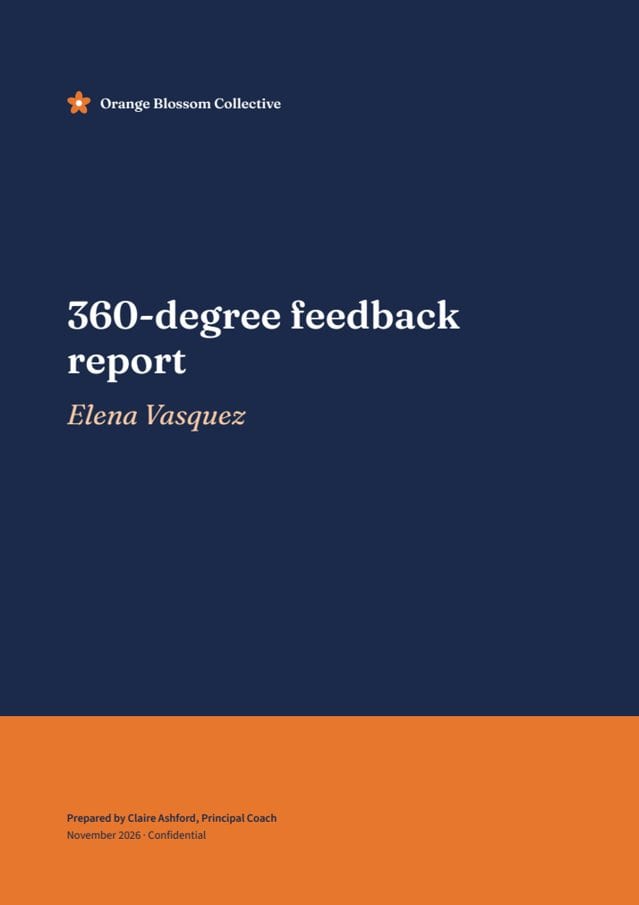

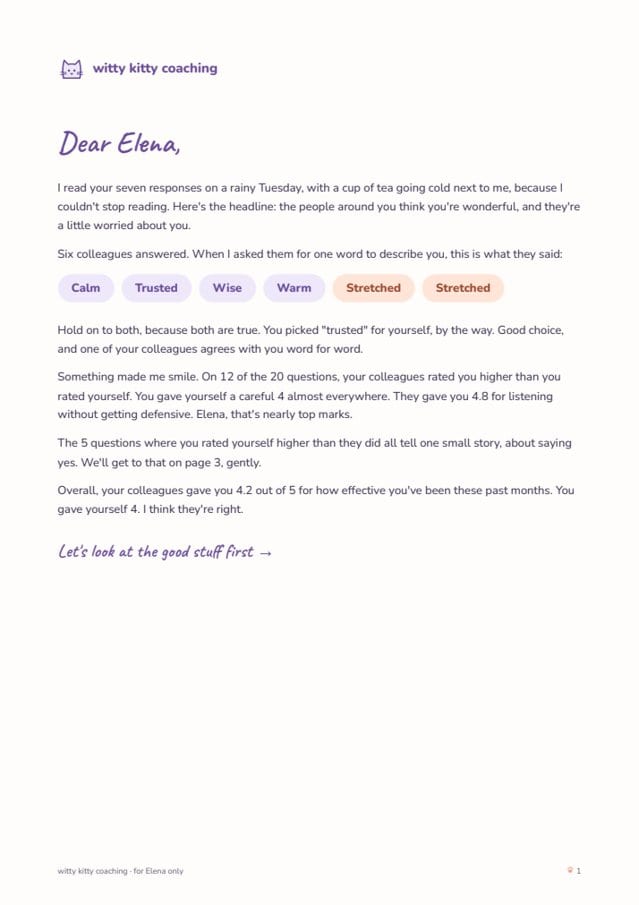
For coaches who'd rather not use AI at all, Org360 still writes a standard report itself, with names removed before comments reach the AI. Read how one coach's practice works this way in From a pile of comments to a coach's own report, or try it on the sample 360 in a free account.
Frequently asked questions
How do coaches use AI?
Mostly for preparation and admin: session prep, note summaries, follow-up emails and marketing. Some use it for rehearsing difficult conversations with clients, and for analyzing 360 feedback. Few use AI to coach clients directly.
Will AI replace coaches?
The data suggests not soon. In the ICF's 2026 consumer study, 80% of people preferred coaching to remain human-led. Coaches like David Taylor-Klaus argue AI puts pressure on purely question-based coaching, and pushes the value toward judgment and relationship.
Should coaches tell clients when they use AI notetakers?
Yes. Put it in the coaching agreement, explain where recordings and transcripts go, and let clients ask for deletion. The ICF's Code of Ethics now addresses technology and confidentiality explicitly.
Can AI write a 360 report for a coach?
Yes. With Org360's connector, a coach's own AI can build the report from the results in the coach's format and voice, and save the format as a skill. Hogan offers certified practitioners an AI first draft through Convogo.
Sources
All checked on 15 November 2026. Vendors change these pages often, so check the current version before you decide.
- ICF Global Coaching Study
- ICF 2026 Global Consumer Awareness Study
- ICF AI Coaching Framework and Standards
- ICF: Coaching and AI, a partnership
- r/executivecoaching: using AI tools in your coaching business
- r/executivecoaching: AI notetakers and client consent
- r/executivecoaching: AI career coaches
- Kevin Anderson on LinkedIn
- Corey Penn on LinkedIn
- David Taylor-Klaus on LinkedIn
- Shelley Poovey on LinkedIn
- Jaime Nolan on LinkedIn
- Hogan: acquisition of Convogo
Get new research by email
About one email a month, when we publish something new on coaching, 360 feedback and engagement surveys.
We'll email you once to confirm. Unsubscribe anytime. See our data protection policy.